








Rating momentum
Aww Amazing!: 9.2/10 across 2.9k ratings. This score says: bump it to the top of your backlog.
About 30 seconds
Answer four quick questions about your experience.
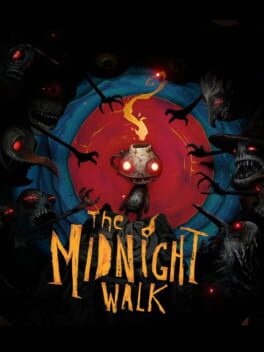
The Midnight Walk is a 2025 Adventure, Puzzle, Indie game rated 9.2/10 from 2.9k ratings, with a main story of about 4h, available on Nintendo Switch 2, PC (Microsoft Windows), PlayStation 5, PlayStation VR2, SteamVR.
Aww Amazing!: 9.2/10 across 2.9k ratings. This score says: bump it to the top of your backlog.
Leans into Adventure, Puzzle, Indie, with a main story around 4h. Check if that style and time commitment fit you.
20 media reviews
 RATE THIS
The Midnight Walk is gorgeous and touching – it took hold of me early and didn't let go until the last step on my journey.
Read full review ↗A wondrous dreamlike world to explore in or out of VR, but a story that doesn't always hit as hard as you might want.
Read full review ↗The Midnight Walk is a rare case of a book best judged by its cover. If its aesthetic speaks to you, you'll have a pleasant, spooky journey alongside Potboy.
Read full review ↗As we rolled credits on The Midnight Walk, any issues we had technically or otherwise had long since faded away. Instead, what stood out to us was the game's haunting world filled with pensive storylines, impactful visuals, and an emotionally weighty score.If you're expecting an engaging survival horror gameplay experience, you won't find it here. That may have been what we were looking for as we first played the game - especially considering the VR format. But what we got instead was memorable, moving, and evocatively melancholic. The Midnight Walk is not a game we'll forget anytime soon.
Read full review ↗The Midnight Walk is an intoxicating journey through a beautifully twisted nightmare world. The Burnt One's quest to Moon Mountain is an atmospheric, bleak, and surprisingly sweet story that's worth experiencing.
Read full review ↗There are weirdos like me that find comfort in horror games, but The Midnight Walk strategically and intentionally walks the line between cozy game and horror game. Come for the vibes, stay for the vibes, as you tread along The Midnight Walk.
Read full review ↗The Midnight Walk is a real eye-catcher, offering one of the most distinctive and visually-arresting worlds yet seen in a horror game. As with most good walks, the experience is often best in its quieter moments, as the game’s puzzles and stealth sections range from good to sometimes merely adequate. That said, The Midnight Walk never strays too far off path and those in the mood for something spooky ought to enjoy the journey.
Read full review ↗There is a piece of advice that often follows those who write about video games: “Never become too attached to a game, otherwise you may lose the ability to judge it objectively.” It is a principle built on good intentions. Criticism requires distance, the willingness to acknowledge flaws even in works we admire, and the discipline to separate personal affection from critical evaluation. Yet there is another danger, one that is perhaps easier to overlook: becoming so accustomed to breaking games down into mechanics, systems, technical performance, and design choices that we lose sight of the reason we fell in love with this medium in the first place. Before we were critics, we were players. We were the people who stood in awe before impossible landscapes, who formed genuine connections with fictional characters, and who found comfort, inspiration, or even moments of personal reflection within stories experienced through a screen. Beneath all the discussions surrounding resolution, frame rates, level design, and mechanical depth lies the fundamental quality that has always defined video games at their best: their ability to make us feel something. The Midnight Walk is a reminder of that simple, yet often forgotten truth. It would be easy to conclude this review by focusing exclusively on what MoonHood has achieved: a handcrafted world sculpted from hundreds of pieces of clay, an artistic identity unlike anything else in the current landscape, a hauntingly beautiful soundtrack, and an extraordinary level of care that can be felt in every frame. All of that would be true. It would also be fair to acknowledge that the game’s intentionally restrained approach to gameplay comes with limitations. Its mechanics are deliberately simple, and while this minimalism perfectly supports the atmosphere and philosophy of the experience, certain systems and encounters could have benefited from greater depth, variety, and refinement. But reducing The Midnight Walk to a collection of strengths and weaknesses would only reveal a fraction of what makes it special. Some games are remembered because of what they offer: the number of mechanics they introduce, the size of their worlds, or the complexity of their systems. Others remain with us because of something far more difficult to quantify, the feeling they leave behind once everything has ended. That moment after the credits, when the screen fades and there is no immediate desire to move on to the next experience. When instead, there is a quiet pause. A moment spent remembering the journey, the characters, the places visited, and the emotions that accompanied every step. That is where the difference between a game that simply entertains and one that genuinely resonates becomes clear. During the journey alongside Potboy, The Midnight Walk repeatedly encourages players to slow down. Not through artificial restrictions, but through the natural pull of its world. There are moments when the player stops simply to observe the way a small flame illuminates the cracks of an unfinished clay surface, to listen to the silence of a world that has lost its sun, or to reconsider creatures that would have been instinctively labelled as monsters elsewhere. And perhaps this is MoonHood’s greatest achievement: not making players believe that this world is real, but making them care enough to see it differently. Throughout its entire adventure, The Midnight Walk quietly asks a question that extends far beyond its own narrative: what happens when we stop seeing darkness as something to fear? For generations, stories have taught us to associate darkness with danger, evil, and the unknown. It is something to overcome, something to illuminate, something from which we must protect ourselves. MoonHood chooses a far more thoughtful path. Here, darkness is not presented as an absence of hope, but as an essential part of existence itself. Because without darkness, light would have no meaning. And once our perception of darkness changes, so does the way we perceive those who live within it. The creatures encountered throughout the journey are not simply enemies waiting to be defeated. They are beings shaped by loneliness, grief, hunger, and the desperate search for warmth. They are not manifestations of evil, but reflections of a world that has forgotten how important compassion and understanding can be. This is where The Midnight Walk’s metaphor becomes truly powerful. Beneath its handcrafted surfaces and gothic fairy-tale aesthetic lies a deeply human observation: how often do we choose judgment before understanding? How often do we fear what is different before taking the time to listen? MoonHood does not suggest that darkness can simply disappear. Instead, it offers a more meaningful idea: not everything that exists within the darkness deserves to be feared. The brightest light is not always the one that reveals the path ahead. Sometimes, it is the one that allows us to see others more clearly. When the journey finally comes to an end, what remains is not only the memory of a remarkable artistic achievement, a world painstakingly crafted from clay, or a soundscape capable of transforming silence into emotion. What remains is something much harder to define. A small flame. A fragile source of warmth that continues to burn even when everything around it has fallen into darkness. And perhaps that is the true beauty of The Midnight Walk. MoonHood has created a game that understands creativity is at its most powerful when it is used to explore something deeply human. Because the most memorable games are not always the ones that overwhelm us with their scale or ambition. Sometimes, they are the ones that quietly change the way we look at the world. The Midnight Walk is one of those rare experiences. Not a flawless game, but an honest and deeply heartfelt one. A journey that does not pretend to have every answer, but possesses the courage to ask the questions that truly matter. And sometimes, the right question can be more powerful than any answer.
Read full review ↗The Midnight Walk knows what it wants to be. It wants to be an atmospheric, handcrafted, slightly creepy storybook adventure about carrying light through darkness. For me, that was enough. The Midnight Walk is stunning, strange, heartfelt, and visually unforgettable. Its mechanics are simple, and one audio-focused idea did not land for me without the right setup, but the journey itself stuck with me.
Read full review ↗When taking the whole experience into account, The Midnight Walk is a lot of style over substance that isn’t actually that much fun to play, which can work for some. Certainly, I’m sure there are some teenagers out there playing this game right now who are preparing to craft their entire personalities around it for the next few years to come. These things come in cycles, you see. But much like those same teenagers years later when reflecting on their blunder years, as I look back on my time with The Midnight Walk, I’m already struggling to recall specific details and why they were meant to be so important. In time the cycle will continue, and another “cute horror” game will emerge to remix the familiar into something vaguely new and neat. By then, your embers will most likely have been forgotten, little Pot Boy.
Read full review ↗